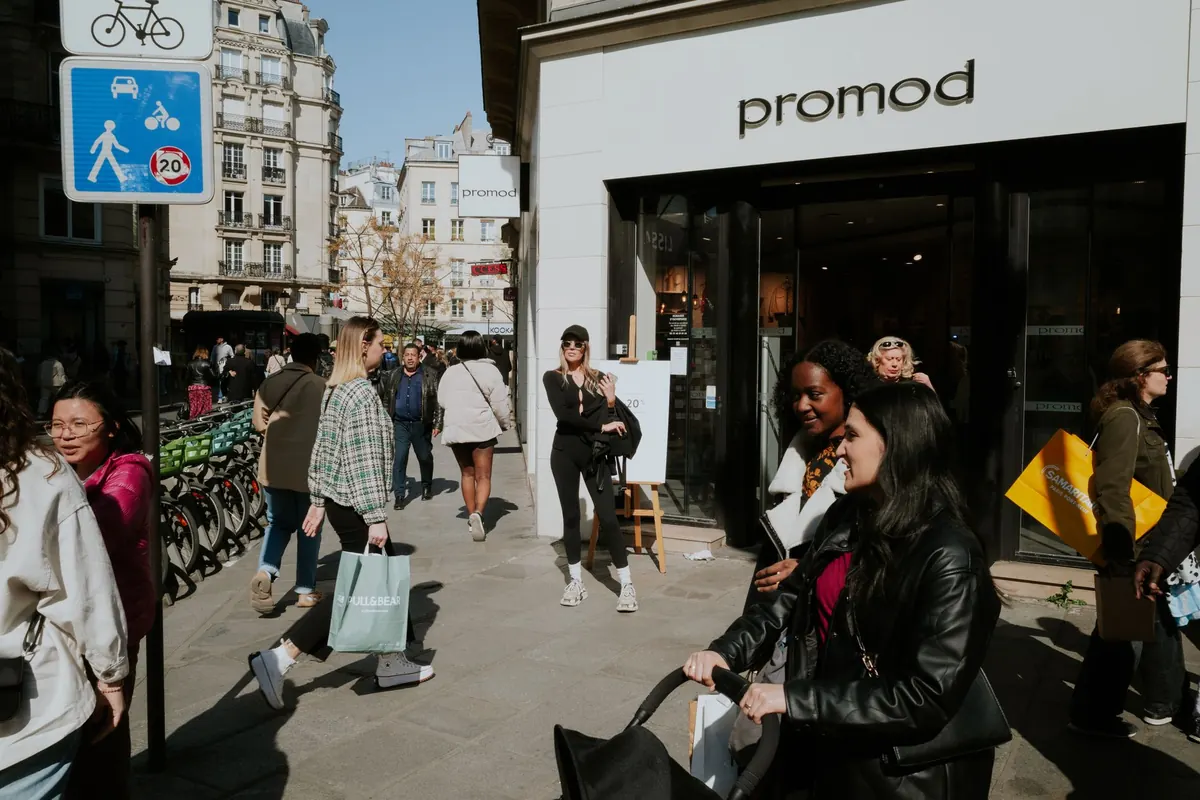
A trend rarely announces itself with a headline. It appears first on a Tuesday afternoon, on someone waiting at a crossing, in a detail you almost miss: a bag charm, a cropped jacket over a long skirt, socks pulled up over the ankle. Six weeks later it is in every shop window. If you photograph on the street, you can catch that middle stretch, when a look is still forming, and build a record that says something real about where you live.
Choose Your Patch and Walk It Often
Most people try to cover too much ground. Pick two or three streets, or one neighbourhood, and return on different days at different hours. Trends spread through places where people linger: outside a university building, a market, a station exit, a park gate, the queue for coffee. One afternoon tells you what one group wears. A month of afternoons tells you what is changing.
Notice who you are actually seeing. A student district and a business district will show different versions of the same trend, and both matter. Local conditions shape clothing far more than any runway does. Climate, how people travel, dress codes at work, the cost of a decent coat — all of it leaves marks on the street.
Vary the timing too. Saturday morning, rush hour, and late evening outside a venue each bring out a different crowd. If you only ever shoot at lunchtime, you will build a very narrow picture of your city.
Look for Repeats, Not One-Offs
One person in an unusual outfit is a person with taste. Ten people, of different ages and from different neighbourhoods, wearing a version of the same detail is a trend. Your job is to count.
Train yourself to notice the third or fourth occurrence rather than the first. Repetition is what turns a nice photo into useful information.
Details beat whole outfits. When you are starting out, tracking a full look is overwhelming — there is too much to hold in your head. Pick specific elements and hunt for those instead.
- Silhouette: boxy shoulders, wide legs, dropped waists, long hems worn over short boots.
- Proportion: an oversized blazer over a narrow skirt, a cropped jacket with low-rise trousers, layers that stop mid-calf.
- Footwear: chunky soles, slim retro trainers, square toes, two-tone sneakers, ballet flats back on the pavement.
- Accessories: small shoulder bags, enormous totes, claw clips, layered chains, bag charms, thin scarves knotted at the throat.
- Colour and fabric: a specific shade people keep reaching for, or a texture such as crochet, sheer mesh or waxed cotton.
- Styling habits: tucking, wearing a dress over trousers, belting a coat, the half-untucked shirt.
Write down what you see each time. A note on your phone with a date and a location is enough. Three notes about the same detail, in three different places, is a signal worth following.
Test What You Have Spotted
Before you call something a trend, put it through a few honest questions.
- Is it being worn by people who clearly do not know each other?
- Does it cross age groups or income brackets, even if the versions differ?
- Are people adapting it — swapping the shoe, changing the fabric — rather than copying one look exactly?
Adaptation is the strongest sign that something is taking root. Exact copies often come from a single shop window or a single influencer, and they fade as fast as they arrive. Once people start making a detail their own, it has escaped the source.
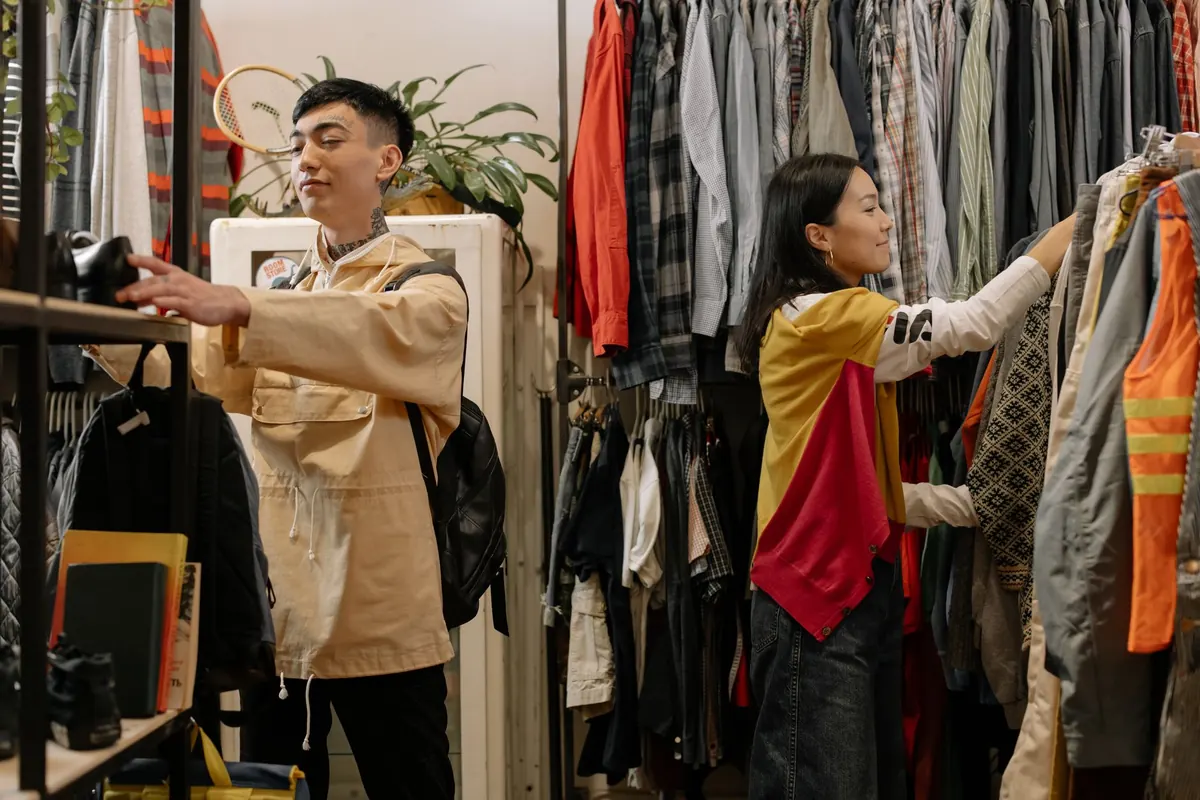
Watch the edges as well. Trends often show up in second-hand rails, alteration shops and repair stalls before they reach chain stores. If the same detail is hanging at the front of a vintage shop and sitting on a teenager's shoulders in the same week, you are watching it move.
Photograph Without Intruding
Street photography and street style overlap, but they are not the same thing. Street style is about the clothes and the choices behind them. That usually means you need a moment of contact, even a brief one.
Ask, shoot, thank, move on. Two frames taken after a thirty-second conversation almost always beat a long, awkward pose.
Some habits that keep both you and your subject comfortable:
- Stay in public places, and use judgement about who you photograph and how close you get.
- Approach with one plain sentence: that you are photographing street style in the city, that you like how they have put something together, and would they mind one picture.
- Take no for an answer the first time, and do not photograph someone who has said no, even from a distance.
- Show them the frame. Offer to send it, and say where it might appear.
- Never block a doorway, step into traffic, or follow anyone down the street.
- If someone asks you to delete an image, delete it without argument.
Rules about photography, privacy and publishing vary from country to country and sometimes city to city. If you intend to sell images or publish them widely, check what applies where you work, or ask a lawyer who knows your region.
Gear and Settings That Keep You Ready
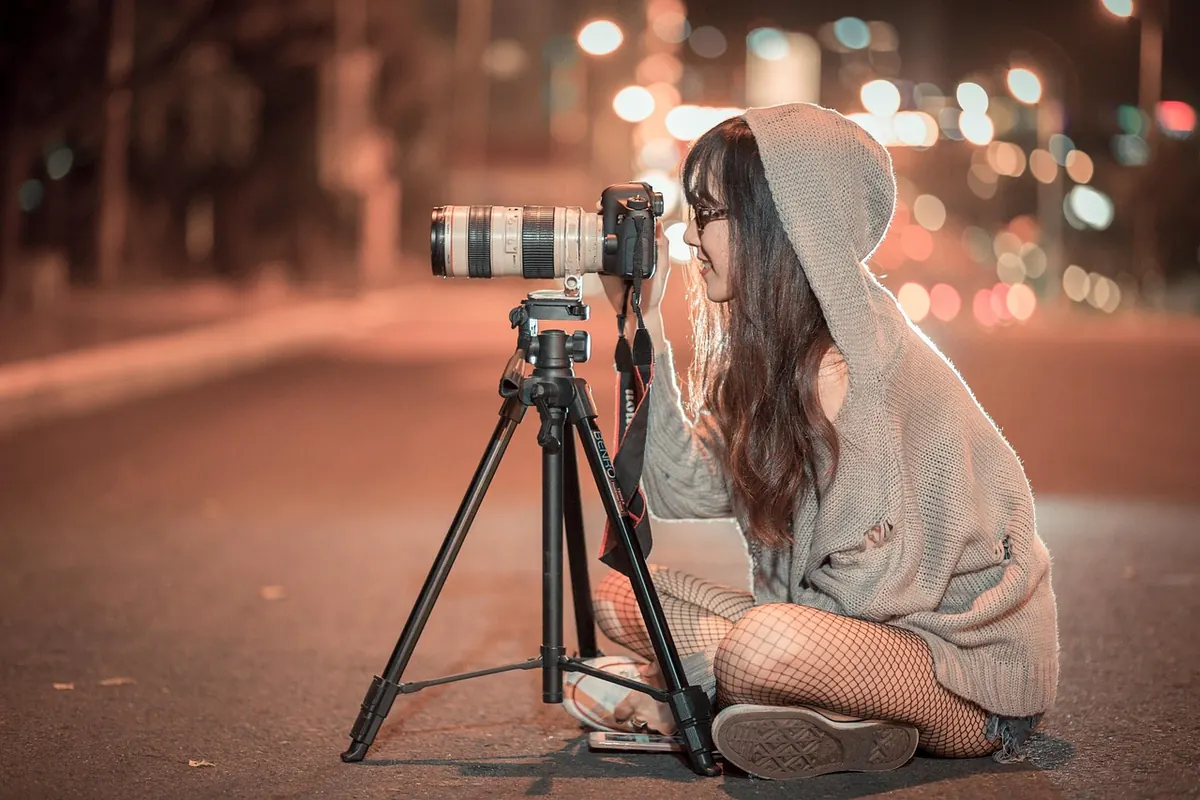
A modest kit is enough. A small camera or a phone with a quiet shutter, plus a lens that lets you stand at a comfortable distance — a 35mm or 50mm equivalent — will handle most of what the pavement offers. Set everything before you leave the house so you are not fiddling while someone walks past.
- Aperture around f/2.8 to f/4: enough separation from the background without losing the outfit.
- Shutter speed of 1/250 or faster for people in motion.
- Auto ISO with a sensible upper limit, so you never miss a frame to a settings menu.
- Continuous shooting, so you catch a stride rather than a stiff pause.
- Auto white balance, corrected later, so you can keep moving.
Light matters more than gear. Overcast skies and open shade flatter fabric and skin; harsh midday sun crushes detail and throws hard shadows. If you have to shoot in strong light, find a wall, an awning or the shaded side of a street. Frame full looks vertically, and keep the shoes in the picture — cropping the feet off a silhouette story removes the point of it.
Keep an Archive You Will Actually Use
Organise by detail, not by date. Folders or tags for wide-leg trousers, silver jewellery, cropped knitwear, whatever you are tracking. Once a month, scroll back through and look for what turns up across shoots that have nothing else in common.
Add a short note to each image: where, when, and one sentence about what caught your eye. Six months later that sentence is worth more than the file name ever will be.
What you end up with is a local record. Nobody else has your route, your timing or your eye, and that is precisely why it is worth keeping.
Start This Week
Pick one street. Walk it twice before the weekend is over with your notes app open. Photograph three people whose outfits share a detail you have started to notice. That is a trend in progress, caught while it is still interesting.
Then read your own notes back and ask the only question that matters: am I seeing a repeat, or am I seeing one person I happened to like? Answer honestly, and keep walking.
Photo: trinhkien91 / Pixabay