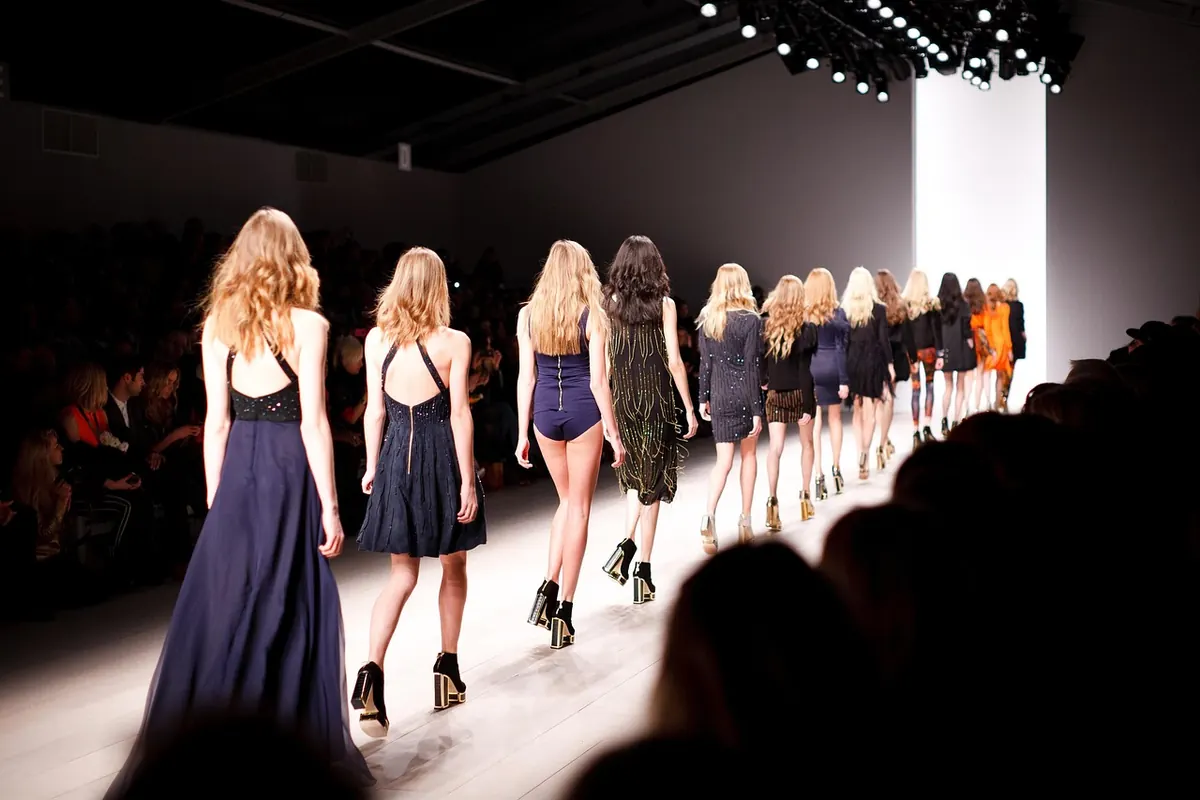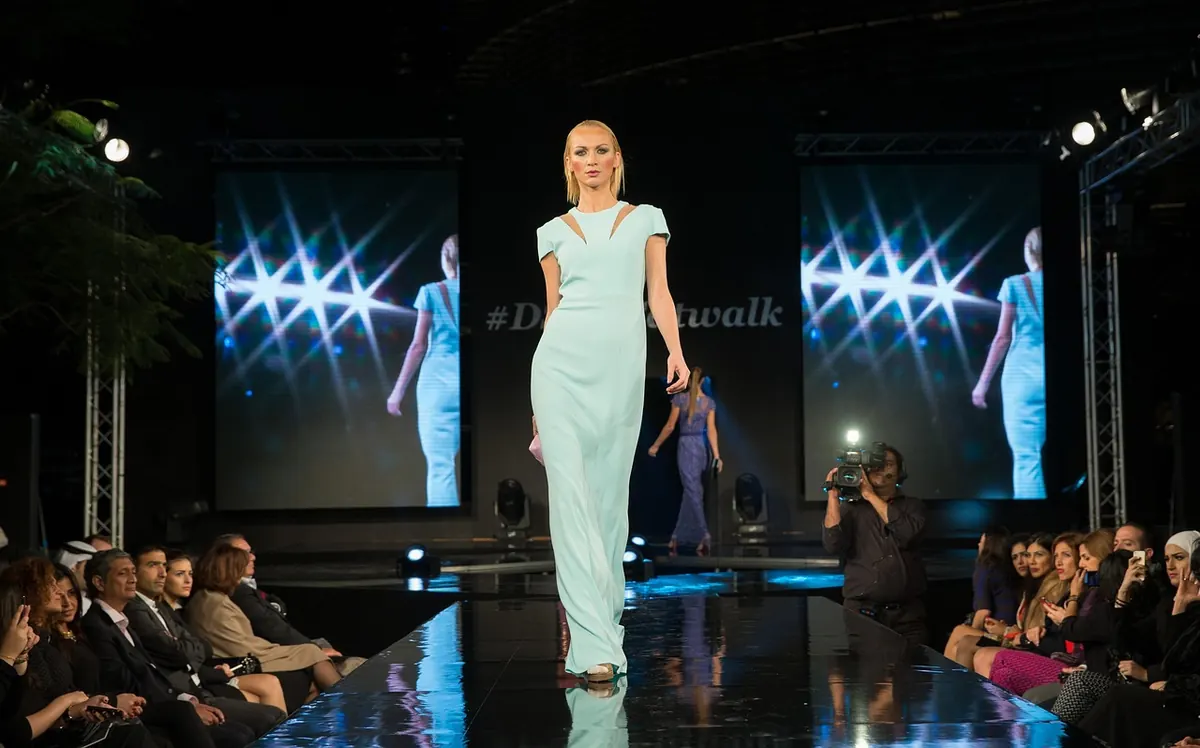
Runway clothes are built to be seen from thirty feet away, under lights that flatter a stiff fabric and punish a soft one. Your Tuesday does not work like that. Still, the distance between a catwalk look and a real outfit is shorter than it appears. It usually comes down to three decisions: fabric, proportion, and styling. Change those, and the trend survives the trip home.
Start With the Shape, Then Quiet It Down
Before deciding whether you'd wear something, work out what the look is actually saying. Is the message a big shoulder? A long, unbroken line? A waist that sits low on the hip? That single idea is the part worth keeping. Everything else — the shine, the volume, the styling — is decoration you can negotiate with.
Take a coat with a rounded, sculptural shoulder. On the runway it might come in glossy leather over a bare leg, which is a lot of look for a school run. Put the same shoulder in double-faced wool, wear it over straight-leg jeans and a fine knit, and it reads as a strong modern coat. The shoulder still does the talking. Nothing else has to shout.
The same logic works downward. If a show pairs a dropped waist with a stiff, floor-sweeping skirt, keep the low waistband and lose the stiffness. A low-slung but not sagging waist on a fluid midi skirt gives you the proportion without the costume.
The Fabric Swap: Keep the Cut, Dull the Surface
Runway fabrics are chosen for how they move on camera: liquid satin, crisp brocade, latex, organza. In daylight, on a bus, in an office, those surfaces read as evening wear or as a very deliberate statement. The fix isn't to abandon the shape — it's to find its matte sibling.
- Satin becomes washed cupro, matte jersey, or a heavy silk-blend.
- Brocade becomes a mid-weight jacquard or a textured wool.
- Latex becomes coated cotton, matte faux leather, or a firm ponte.
- Organza becomes cotton voile, chiffon, or a sheer fine-gauge knit worn over something solid.
Keep the cut, change the finish. A high-shine fabric makes a simple shape look loud, while a matte one makes an extreme shape look calm. That single swap solves more translation problems than any amount of accessorising.
One Bold Volume Per Outfit
Proportion is where most translations collapse. Runway styling often stacks two big shapes, because a photograph needs drama in every corner. Real outfits need balance.
Pick which half of your body gets the volume, then let the other half work against it. Exaggerated shoulders mean straight, narrow legs and simple shoes. Wide or barrel-leg trousers mean a fitted top, tucked or cropped at the waistband. A full, long skirt means a tucked knit or a close-fitting shirt and a flat that shows some ankle. If you want both a big top and a big bottom, break the line with a belt at the waist so the eye has somewhere to rest.
Length matters as much as width. A cropped jacket over a long skirt is a clean proportion; a long jacket over a long skirt can swallow you unless the fabrics are fine and the colours are close.
The Trend-by-Trend Translation
Here's how a handful of recurring runway ideas tend to move into daily wear. In every case, the silhouette stays and the intensity drops.
- Strong tailoring. Runway: a sharp, wide-shouldered suit worn as a full statement. Real life: keep the jacket, swap the matching trouser for dark denim or a simple column skirt, and wear a plain T-shirt underneath instead of a bare chest.
- Sheer layering. Runway: a transparent skirt over a bodysuit. Real life: a fine mesh long-sleeve over a tank with a slip skirt, or a voile skirt over a plain slip dress. Put the transparency where you want attention — a sheer sleeve is far easier to live in than a sheer torso.
- Low, dropped waists. Runway: waistbands well below the natural waist with a long, lean line. Real life: choose a low-slung but secure waistband and keep the rest of the outfit close to the body so the proportion reads as intentional rather than accidental.
- Barrel and wide legs. Runway: sculptural, architectural trousers. Real life: the same shape in rigid denim or a mid-weight wool, with a shoe that has a little height or a substantial sole so the hem doesn't pool around your ankles.
- Monochrome with texture. Runway: one colour head to toe. Real life: keep the single colour but mix at least three textures — knit, leather, suede, denim — so the outfit reads rich rather than flat.
- Leather and fringe. Runway: full leather looks with swinging fringe. Real life: start with one leather piece, such as a skirt or a trench, and let fringe live on a bag or a hemline rather than a whole jacket.
- Ladylike accessories. Runway: small structured bags, slim scarves, pointed flats, one piece of vintage-feeling jewellery. This one translates almost untouched. Skip the gloves unless the weather asks for them.
Styling Moves That Do the Heavy Lifting
The last ten percent of a look is almost always styling, not shopping. These small adjustments finish the job:
- Push your sleeves up to the wrist bone. An exposed wrist makes a bulky coat or blazer look deliberate instead of borrowed.
- Belt over the blazer, not under it, when you want a waist in a boxy jacket.
- Swap the runway shoe for something you can walk in. A pointed flat, a slim ankle boot, or a low block heel will carry most translated looks further than a stiletto.
- Edit the jewellery down to one piece that reads as a decision rather than a collection.
- Tuck something — the front of a long shirt, the hem of a knit — so a loose silhouette still shows where your waist is.
- Echo one colour low down. A bag or shoe that repeats your top colour makes a two-colour outfit look considered.
A Two-Minute Test Before You Leave
Stand in front of a full-length mirror, step back three paces, and run through this quickly.
- Count the colours. Three is comfortable; four is a stretch unless one of them is a neutral you're repeating.
- Find the focal point. If you can't name the one thing the outfit is about, remove something.
- Check the proportion in silhouette. Squint. The shape should still make sense as a dark blur.
- Move: sit down, reach overhead, climb a stair. If anything pulls, gaps, or needs adjusting every ten minutes, it isn't ready.
- Look at the shoes last, because they set the register. The same outfit reads casual or sharp depending on what's on your feet.
Translation isn't watering a trend down until it disappears. It's keeping the one idea that excited you and removing everything that only worked under stage lights. Pick one trend this season, run it through the fabric and proportion filters, and wear it somewhere ordinary. That's usually where a runway look proves whether it has a life beyond the photograph.
Photo: AhmadArdity / Pixabay